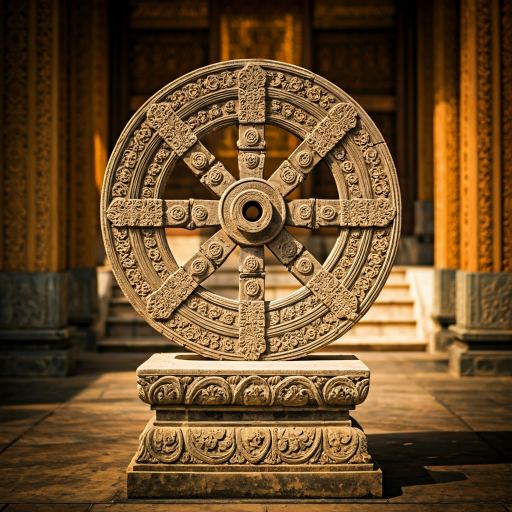
The Jhanas - what are they?

The Hidden Levels of Your Own Mind: What the Jhanas Are and How to Experience Them
You've probably tried meditation before. Maybe you downloaded an app, sat on a cushion, tried to focus on your breathing for ten minutes, and spent most of that time thinking about your grocery list. Maybe it helped a little with stress. Maybe you gave up after a week.
What if I told you that meditation can produce experiences of profound joy, deep peace, and extraordinary mental clarity — states so vivid and unmistakable that people who experience them describe their lives as divided into "before" and "after"? These states are called the jhanas, and while they've been known for over 2,600 years, most modern meditation approaches never mention them. Until now.
This isn't esoteric mysticism or something reserved for monks living in caves. The jhanas are natural states that your mind is already capable of producing when the conditions are right. And there's a method — called Tranquil Mind — that makes those conditions surprisingly accessible, even for beginners.
Let me explain what the jhanas are, what they feel like, and how this particular approach to meditation can help you experience them.
So What Exactly Are the Jhanas?
Think of the jhanas as progressively deeper levels of mental well-being that arise naturally during meditation. They're not something you hallucinate or imagine. They're not drug-induced altered states. They're what happens when your mind becomes genuinely settled and calm — when the usual background noise of worry, craving, restlessness, and self-criticism temporarily fades away, and what's left underneath is surprisingly wonderful.
The word "jhana" comes from an ancient Indian language, and it roughly means a state of deep mental composure. The historical Buddha described eight of these states, each one more refined and subtle than the last.
Here's a quick sketch of what they're like, in plain terms.
The first jhana is characterized by joy and happiness. When the mental chatter finally quiets down and you're resting in the warm feeling of your meditation, a sense of joy arises. People describe it as excitement, lightness, warmth, even bubbling energy. One practitioner described it as an overwhelming wave of joy that brought tears to their eyes. It's unmistakable — you've felt nothing quite like it before. After the initial excitement settles, a deep sense of happiness and tranquility follows. Your mind stays on its object almost effortlessly. It's like the background hum of a refrigerator you never noticed suddenly clicking off, and realizing how noisy things were all along.
The second jhana is a deepening of that joy, but with a new quality: confidence. The joy becomes more stable, quieter, subtler. Your mind and body may feel very light, almost like floating. Internal dialogue — the voice in your head that narrates everything — starts to naturally go quiet. Not because you're forcing it to stop, but because the mind has settled into something deeper than words. This is sometimes called "noble silence," and it's a silence you feel rather than enforce.
The third jhana is where the excitement of joy begins to settle into something even more refined: a deep contentment and happiness. You might notice that parts of your body seem to disappear from awareness — not because anything is wrong, but because your attention is so deeply at rest that it's no longer scanning your body the way it usually does. One meditator reported feeling as if her head was simply resting on the floor with nobody attached to it. Another said their hands "went missing." Everything feels balanced, comfortable, and profoundly okay. There's a growing sense of equanimity — a mental evenness where nothing really bothers you.
The fourth jhana is often called "The Beautiful." The happiness fades into a profound stillness and balance. Your mind is clear, bright, and remarkably stable. Nothing shakes it — a loud noise outside is simply registered and released. Pain in your body may disappear entirely, not because you can't feel it, but because your mind no longer reacts to it with resistance. There's a sense of deep equanimity that is neither happy nor unhappy, but something beyond both. It's a kind of peace most people have never experienced.
The fifth through eighth jhanas move into increasingly subtle territory. The mind begins to experience a sense of boundless space, then an awareness of consciousness itself arising and passing away, then a quality of deep nothingness, and finally a state so refined it's described as "neither perception nor non-perception" — the mind is barely aware of itself at all. These are sometimes called the "formless" jhanas because the mind has moved beyond its usual sense of boundaries and form.
What's remarkable about all of these states is that you remain aware throughout. You're not unconscious, you're not in a trance, and you're not zoned out. In fact, your awareness is sharper than usual. You can hear if someone calls your name. You simply have a calm, clear mind that isn't pulled around by its usual habits.
Why Haven't I Heard of This Before?
If you've used a meditation app or taken an introductory mindfulness class, there's a good chance the jhanas were never mentioned. Most popular meditation approaches today are simplified extracts from a much larger system. They're often focused on stress reduction or basic awareness training — which is valuable, but it's a bit like learning to swim in the shallow end without anyone telling you there's an entire ocean out there.
The jhanas are part of the original, complete system of meditation that the Buddha taught. Over the centuries, as the teachings were transmitted through different cultures and traditions, the practical instructions for accessing these states became fragmented. Different schools emphasized different aspects, and some of the most transformative elements — including the jhanas — fell out of common practice.
In recent years, interest in the jhanas has surged. Neuroscientists are studying them. Experienced meditators from various traditions are talking about them openly. And more people are asking the obvious question: how do I actually experience these states?
How the Tranquil Mind Method Works
This is where the Tranquil Mind approach comes in. Based on what the earliest Buddhist texts actually describe, this method uses a specific meditation technique that creates the conditions for jhanas to arise naturally. It doesn't require years of grueling practice, monastic discipline, or any particular belief system. You don't need to be Buddhist, adopt any religious framework, or learn any foreign terminology beyond what's helpful.
The method has three core components: loving-kindness as the meditation object, a technique called the 6Rs for working with distractions, and — perhaps surprisingly — smiling.
Loving-kindness as the foundation. Most meditation methods ask you to watch your breath. That can work, but many people find it dry, boring, or frustrating. The breath is a subtle and neutral object, and for a lot of people, trying to keep their attention on something so subtle feels like work.
Tranquil Mind uses the feeling of loving-kindness instead. This is a genuine, heartfelt wish for happiness and well-being — first directed toward yourself, then toward someone you care about (called a "spiritual friend" in this tradition). The feeling is warm, pleasant, and easy to stay with. Your mind naturally gravitates toward pleasant things, which means less struggle, less forcing, and faster progress. When meditation feels good, you want to do more of it. Progress follows naturally. In fact, this has been validated by science.
A typical session starts with about ten minutes of cultivating this warm feeling toward yourself — silently saying something like "May I be happy, may I be peaceful" while focusing on the actual feeling those words evoke, which most people feel as a gentle warmth in the chest area. Then you shift to holding your spiritual friend in your awareness and radiating that same feeling toward them for the remaining twenty or more minutes of the session. The key is that your attention rests primarily on the feeling itself — not on the words, and not on a mental image — the warm, kind feeling is your meditation object.
The 6Rs: a gentle way to handle distractions. Your mind will wander. This is completely normal and expected — its what minds do. The question isn't whether your mind will wander, but what you do when it happens. Many meditation approaches tell you to simply "return to the breath," which leaves most people feeling like they're failing dozens of times per session.
The Tranquil Mind method uses a six-step process called the 6Rs that transforms each moment of distraction into an opportunity for genuine progress. Here's how it works.
First, you Recognize that your mind has wandered. You were supposed to be with the feeling of loving-kindness, but now you're planning tomorrow's meeting. Just notice this without judgment.
Second, you Release the distraction. You don't push it away, argue with it, or try to understand why it happened. You simply stop feeding it with your attention. Like putting down a hot coal — you just let it go.
Third — and this is the most important step — you Relax. You consciously soften any tension or tightness that has built up in your mind and body. This might be a tight jaw, tension in your forehead, or a subtle clenching in your chest. This step is revolutionary because every distraction leaves a residue of tension. By deliberately relaxing that tension, you're actually releasing the underlying mental habit — the craving or aversion — that caused the distraction in the first place. Each time you relax, you feel a small but real sense of relief. It's immediate. And it accumulates.
Fourth, you Re-smile. You put a gentle smile back on your face, in your eyes, and in your heart. This isn't forced cheerfulness — it's a way of uplifting your mental energy and returning to a wholesome state.
Fifth, you Return your attention gently to the feeling of loving-kindness.
Sixth, you Repeat this process whenever your mind wanders again.
If your mind wanders thirty times in a thirty-minute session and you do the 6Rs thirty times, that's not a failed meditation — that's thirty successful practices of letting go. You're building a skill. Each cycle purifies the mind a little more. Over days, weeks, and months, the mental habits that created your stress, reactivity, and dissatisfaction begin to weaken and fade.
Smiling. This one surprises people, but it's integral to the method. Keeping a gentle smile throughout your meditation does several things: it physically relaxes the face (one of the most tension-prone areas of the body), it generates a subtle sense of well-being, and it keeps the practice light and enjoyable rather than grim and effortful. Seriousness creates tension. Tension creates craving. Craving is exactly what you're learning to let go of. So you smile.
How the Jhanas Actually Arise
Here's the beautiful thing about the jhanas in this approach: you don't chase them. You don't force your way into them. They arise on their own as a natural consequence of practicing correctly.
Here's the mechanism. Every time a distraction arises during meditation, it's powered by one of the mind's habitual patterns — wanting something, resisting something, being restless, feeling doubtful, or getting sleepy. These are called hindrances, and they operate like background programs draining your mental battery. Every time you do the 6Rs — and especially every time you relax — you weaken one of these patterns a little bit. You release the craving that was fueling it.
Eventually, after enough cycles of this process, a hindrance runs out of energy entirely. It just doesn't have the fuel to pull your attention away anymore. And when that happens, the mind enters a natural state of composure and well-being. Joy arises. Happiness follows. Your mind rests on its object with almost no effort. This is the first jhana.
It's not something you manufacture. It emerges from absence — the absence of the tension and craving that was previously obscuring it. It's a little like how you don't create silence by adding noise. You create silence by removing the noise that was already there. The jhanas reveal what was always underneath.
As practice deepens, the jhanas progress naturally. The object of meditation itself evolves — from loving-kindness in the early jhanas, to compassion, then to a quality of shared joy, and eventually to a profound equanimity. Each transition happens organically as the mind settles into deeper states.
What Makes This Different from Other Meditation Methods?
If you've tried other meditation approaches, several things set the Tranquil Mind method apart.
First, it emphasizes relaxation rather than concentration. Many meditation traditions treat the jhanas as products of intense, narrowly focused concentration — what might be called absorption states. In those approaches, you essentially force the mind to stay on one tiny point until everything else shuts down. This can work, but it often feels like work, can produce uncomfortable side effects like anxiety or unpleasant energy surges, and the states it produces tend to be temporary — they don't translate into lasting changes in how you experience daily life.
The Tranquil Mind approach is fundamentally different. The jhanas that arise here are "aware" jhanas — your mind is settled and composed, but you remain aware of your surroundings. You can hear sounds, feel sensations, and even have thoughts. The difference is that none of these things pull you away from your state of peace. Rather than shutting down awareness through force, this method opens it up through release. The key ingredient isn't effort — it's the relax step. By releasing tension and craving again and again, the mind naturally becomes calm, collected, and clear.
Second, this method is immediately effective. You don't need to practice for years before you see results. Many people notice increased calmness, improved mood, and better sleep within their first few weeks. The 6Rs work from the very first session — every time you relax and let go of a distraction, you experience a small moment of relief. That relief is real, and it's cumulative.
Third, the practice feels good. This might sound obvious, but it's actually unusual in meditation. Many approaches involve sitting with discomfort, battling your thoughts, or maintaining painful postures. Tranquil Mind emphasizes joy, fun, and lightness. You're meditating with a smile on your face, cultivating a feeling of warmth and kindness. When meditation is enjoyable, consistency comes naturally. And consistency is what makes the deeper states accessible.
What You Can Expect
If you begin practicing the Tranquil Mind method with consistency — ideally thirty minutes a day, with the first ten minutes radiating loving-kindness to yourself and the remaining twenty minutes to your spiritual friend — here's a rough sense of what the journey might look like.
In the first few weeks, you'll likely notice that your mindfulness improves — you catch your wandering mind more quickly. Daily life feels a bit easier. You may be calmer, more patient, and people around you might respond more positively to you without knowing why.
With continued practice, joy begins to arise naturally during meditation. You might feel a deep contentment, a sense of peace you didn't know was possible. Your body may feel very light during practice, or you may temporarily lose awareness of it entirely. The mind becomes quieter in a way that feels effortless and welcoming.
As for the jhanas themselves — the timeline varies person to person. Some people have initial jhana experiences within days or weeks; for others it takes months. The key factors are correct technique, regular practice, and ideally working with an experienced guide who can offer personalized instruction. The Tranquil Mind community offers this kind of guidance freely, in keeping with the ancient tradition that these teachings should be available to everyone regardless of their ability to pay.
The Jhanas Are Part of Something Larger
One last thing worth knowing: as wonderful as the jhanas are, they aren't the ultimate point of this practice. In the original teaching, the jhanas are part of a complete path — a path that leads not just to temporary states of deep happiness, but to lasting freedom from the mental patterns that create suffering. The jhanas develop the mental qualities — clarity, equanimity, insight — that are needed for this deeper transformation.
However, you don't need to think about that right now. You can simply start practicing, enjoy the benefits, and see where it leads. But it's worth knowing that what begins as a simple meditation technique for stress relief can, if you follow it to its natural conclusion, open into something far more profound: a genuine understanding of how your mind works and a lasting peace that doesn't depend on anything external.
The practice is simple. Sit comfortably. Smile. Generate a feeling of warmth and kindness toward yourself. Extend it to someone you care about. When your mind wanders — and it will — gently recognize what happened, let it go, relax, re-smile, return to the feeling, and repeat. That's it. Everything else unfolds from there.
The Buddha said these teachings are "immediately effective." You can start experiencing benefits today, not after years of struggle. And the deeper states — the jhanas, the insights, the peace — they're waiting for you, right there inside your own mind, as they've always been.
All you have to do is sit down, smile, and begin.
Tranquil Mind teaches this complete path using a gentle, effective method based on loving-kindness. All teaching is offered freely. To learn more or connect with a guide, visit tranquilmind.io
To learn more or to begin your practice, visit TranquilMind.IO. All teaching is offered freely. Guides are available for one-on-one sessions, small group Zoom retreats, and in-person retreats. Tranquil Mind is a 501(c)(3) nonprofit organization, and donations are tax-deductible.

0 Comments