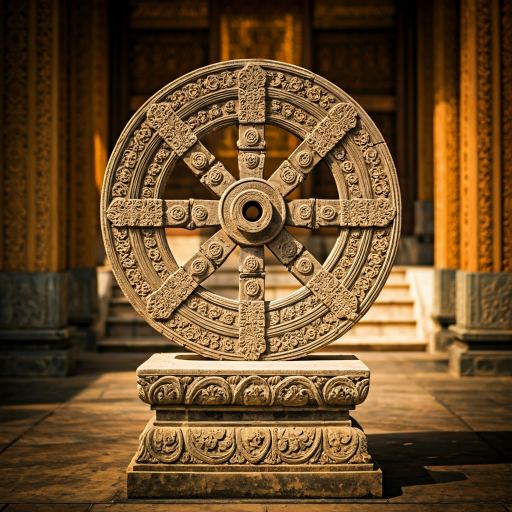
The Four Noble Truths
The Buddha's Blueprint for Freedom: How Tranquil Mind Meditation Embodies the Four Noble Truths
Introduction: A 2,600-Year-Old Discovery That Changes Everything
Imagine discovering the root cause of every frustration, disappointment, and heartache you've ever experienced—and then learning that this cause is something you can actually address. This is exactly what Prince Siddhartha Gautama discovered 2,600 years ago when he became the Buddha, the "Awakened One."
The Buddha's discovery wasn't a religious revelation or a philosophical theory. It was a precise, empirical observation about how suffering arises in the human mind and body—and how it can cease completely. He called this discovery the Four Noble Truths, and he spent the next forty-five years teaching thousands of people how to verify these truths for themselves through meditation practice.
What's remarkable is that many of those practitioners achieved complete liberation from suffering, not after lifetimes of practice, but within their own lifetimes—some within months or even weeks. The Buddha described his teaching as "immediately effective," meaning you don't have to wait years to experience results. You can feel relief right now, in this very moment.
This essay explores the Four Noble Truths and demonstrates how Tranquil Mind meditation—specifically the practice of loving-kindness meditation combined with the revolutionary technique called the 6Rs—is a direct and faithful implementation of what the Buddha actually taught. More importantly, you'll discover why this matters for your own life and why you might want to experience this transformation for yourself.
The Four Noble Truths: The Buddha's Core Teaching
The First Noble Truth: There Is Suffering (Dukkha)
The Buddha began with a simple observation that anyone can verify: life contains suffering. But the Pali word "dukkha" means more than just pain or misery. It encompasses the entire spectrum of dissatisfaction that pervades human experience:
- The obvious suffering of physical pain, illness, and loss
- The suffering of not getting what we want
- The suffering of getting what we don't want
- The suffering of getting what we want, only to lose it
- The subtle, pervasive sense that something is never quite right
- The anxiety of uncertainty about the future
- The stress of trying to control what we cannot control
When the young prince left his palace and saw sickness, old age, and death for the first time, he was shocked. But he wasn't just observing physical suffering—he was recognizing the fundamental unsatisfactoriness of existence when we don't understand how our minds work.
This isn't a pessimistic teaching. The Buddha was simply asking us to be honest about our experience. Do you ever feel stressed? Disappointed? Frustrated? Anxious? Sad? Lonely? Irritated? These are all forms of dukkha, and the Buddha's point was not to make us depressed about this reality, but to motivate us to find the solution.
The Second Noble Truth: Suffering Has a Cause (Tanha - Craving)
Here's where the Buddha's insight becomes revolutionary. He didn't just observe that suffering exists—he identified its cause with surgical precision: craving, or tanha in Pali.
Craving manifests in three primary forms:
1. **Craving for pleasure or pleasant experiences** - "I want this!"
2. **Craving for things to go away or be different** - "I don't want that!"
3. **Craving for things to be permanent or for a fixed sense of self** - "This is me!"
But here's the crucial point that Tranquil Mind meditation emphasizes: **craving always manifests as tension and tightness in both mind and body.** This is not an abstract concept—it's a physical, observable reality that you can verify for yourself.
Think about a time when you really wanted something you couldn't have. Did you feel a tightness in your chest, a tension in your shoulders, a clenching in your jaw, a pressure in your head? That physical sensation is craving manifesting in your body.
Think about a time when someone said something that irritated you. Did you feel yourself physically contracting, tensing up, your thoughts racing? That's craving showing up as "I don't want this!" The tightness is the craving.
The Buddha discovered that it's not life itself that causes suffering—it's our craving, our wanting things to be different from how they are, that creates suffering. And this craving shows up as tangible tension that we can learn to recognize and release.
The Third Noble Truth: Suffering Can Cease (Nirodha)
This is the most hopeful truth of all: suffering is not an inevitable, permanent condition. It can end. Complete freedom from suffering is possible, and the Buddha called this freedom Nibbāna (Nirvana in Sanskrit).
But here's what makes Tranquil Mind meditation so powerful: you don't have to wait until some distant future to experience cessation. Every single time you relax the tension and tightness caused by craving, you experience a mini-cessation of suffering right in that moment.
This is what the Buddha meant when he said his teaching is "immediately effective." When you release the tight mental fist gripping onto a thought, when you soften the tension in your head and body, you feel immediate relief. That relief is the Third Noble Truth in action—it's a taste of Nibbāna, right here and now.
Imagine doing this thousands of times. Imagine repeatedly experiencing the relief of letting go of tension, over and over again, until it becomes natural, automatic, and eventually permanent. This is the path to complete liberation.
The Fourth Noble Truth: There Is a Path to End Suffering (Magga)
The Buddha didn't just identify the problem and the solution—he provided the exact roadmap to freedom. This roadmap is called the Noble Eightfold Path, which includes:
1. Right View (understanding)
2. Right Intention
3. Right Speech
4. Right Action
5. Right Livelihood
6. Right Effort
7. Right Mindfulness
8. Right Concentration (actually better translated as "Right Collectedness")
The path is not a sequence of steps to follow one after another, but rather eight interconnected practices that support and reinforce each other. And meditation—specifically the practice of loving-kindness with the 6Rs—directly cultivates several of these path factors, especially Right Effort and Right Mindfulness.
What Is Tranquil Mind Meditation?
Tranquil Mind is based directly on the Buddha's original teachings as recorded in the Pali Canon, the earliest Buddhist scriptures. Unlike many modern meditation practices that have been influenced by later traditions or contemporary psychology, Tranquil Mind returns to what the Buddha actually taught.
The practice has two main components:
1. Loving-Kindness (Mettā) as the Meditation Object
Rather than using the breath or body sensations as the primary focus, Tranquil Mind uses loving-kindness—a warm, friendly, accepting feeling toward yourself and others. This isn't just a pleasant add-on; it's essential for several reasons:
- Loving-kindness directly counteracts ill-will, one of the major hindrances to meditation
- It creates a wholesome, uplifting mental state that supports concentration
- It generates joy and happiness, which are necessary components of deep meditation states (jhānas)
- It softens the heart and makes it easier to let go of attachments
- It aligns with the Buddha's teaching that meditation should be pleasant, not a grim struggle
You start by generating this feeling of loving-kindness toward yourself—wishing yourself well, being your own best friend. Then you extend it to a spiritual friend (someone you care about), and eventually to all beings.
2. The 6Rs: The Revolutionary Technique for Letting Go
Here's where Tranquil Mind meditation becomes truly distinctive and powerful. The 6Rs are a precise, step-by-step method for working with distractions, and they directly embody the Buddha's teaching on Right Effort.
The 6Rs are:
1. **RECOGNIZE** - Notice that your mind has wandered from loving-kindness
2. **RELEASE** - Stop giving attention to the distraction
3. **RELAX** - Soften any tension or tightness in mind and body
4. **RE-SMILE** - Put a gentle smile back on your face
5. **RETURN** - Gently redirect attention back to loving-kindness
6. **REPEAT** - Do this cycle again whenever needed
Let's explore why this simple technique is so profound.
The 6Rs: Where the Four Noble Truths Come Alive
Recognize: Seeing the First Noble Truth
When you notice that your mind has wandered—that you're thinking about dinner, replaying a conversation, worrying about tomorrow, or feeling a physical sensation—you're directly observing the First Noble Truth. That distraction, that pulling away from present-moment peace, is dukkha. It's dissatisfaction manifesting in real-time.
Mindfulness—the ability to remember to observe—allows you to catch this happening. Without mindfulness, you'd just continue lost in thought, unaware that you've been hijacked by your wandering mind. But with mindfulness, you can observe: "Oh, I'm not with loving-kindness anymore. I'm thinking about my argument with my colleague."
This recognition is not a failure—it's a success. It's the moment of awakening within your meditation. You've become aware of suffering as it arises.
Release: Beginning to Address the Second Noble Truth
When you release—when you simply stop paying attention to the distraction—you're beginning to address the cause of suffering. You're not fighting with the thought or trying to push it away. You're not getting frustrated with yourself. You're simply choosing not to feed it with your attention anymore.
This is crucial: thoughts and distractions don't arise because you're a bad meditator or because you're doing something wrong. They arise because that's what minds do. You can't control whether thoughts appear. But you can choose not to engage with them, not to continue the mental conversation.
Think of it like this: a thought is like a fire. If you keep adding fuel (attention), it grows bigger and burns longer. If you stop adding fuel, it naturally dies down. You're not smothering it or fighting it—you're just no longer feeding it.
Relax: The Revolutionary Step That Changes Everything
This is the step that most meditation systems miss or gloss over, and it's the most important step of all. This is where you directly work with the Second Noble Truth—the cause of suffering.
Remember: craving always manifests as tension and tightness in both mind and body, especially in the head. When you're distracted, there's a subtle clenching, a contraction, a holding on. You might feel it as:
- Pressure or tightness in your forehead
- Tension in your jaw
- Clenching in your chest or stomach
- A sense of mental gripping or holding
- Physical rigidity anywhere in your body
When you actively relax—when you consciously soften and release this tension—you are literally letting go of craving in that moment. You're loosening the tight fist that's gripping the thought or sensation. You're unclenching the mental and physical contraction.
And this is where you directly experience the Third Noble Truth: the cessation of suffering.
As you relax, you feel immediate relief. The pressure releases. The tightness dissolves. The suffering—even if it was subtle—ceases. This isn't theoretical or philosophical. It's a direct, visceral experience that you can verify for yourself.
This is what the Buddha called "tranquilizing the bodily formation" and "tranquilizing the mental formation." It's the active process of softening, easing, and releasing the tension that binds you.
Here's the profound truth: every time you complete the Relax step, you are practicing the cessation of suffering. You're training your mind and body in letting go. You're purifying your consciousness by releasing the craving that creates dukkha.
Do this once, and you get a moment of relief. Do this thousands of times, and you transform your entire being.
Re-Smile: Bringing Up a Wholesome State
After you've relaxed and experienced that relief, you re-smile—you put a gentle, soft smile back on your face, in your eyes, in your heart, in your mind.
Why is this important? The smile keeps your meditation light, bright, and uplifting. It prevents you from becoming grim, serious, or tense. It generates joy and happiness, which are essential for developing deep concentration and the meditative absorptions called jhānas.
The Buddha emphasized over and over that meditation should be pleasant, even blissful. The smile is your reminder that this is not a struggle, not a battle with your mind, but a gentle, kind, even joyful process of letting go.
Return: Cultivating a Wholesome Object
After relaxing and smiling, you gently return your attention to loving-kindness. You redirect your mind back to that warm, friendly, accepting feeling. You're bringing up a wholesome mental state to replace the unwholesome one.
This directly corresponds to the Buddha's definition of Right Effort:
1. Notice an unwholesome state has arisen (Recognize)
2. Stop paying attention to it (Release)
3. Bring up a wholesome state (Re-smile and Return)
4. Stay with that wholesome state (Return and Repeat)
The 6Rs are nothing other than Right Effort in action. This is not a modern interpretation or adaptation—it's what the Buddha actually taught about how to work with the mind skillfully.
Repeat: The Accumulation of Purification
Finally, you repeat this entire process again whenever your mind wanders. And it will wander—thousands of times. This is not a problem. This is the practice.
Each cycle of the 6Rs purifies your mind a little more. Each time you relax the tension of craving, you weaken its hold on you. Each time you return to a wholesome state, you strengthen your capacity for peace and happiness.
It's like drops of water filling a bucket. One drop seems insignificant, but thousands of drops eventually fill the bucket to overflowing. Similarly, each individual cycle of the 6Rs might seem small, but thousands of cycles accumulate into profound transformation.
Why Relaxing Is the Key to Everything
Let's go deeper into why the Relax step is so revolutionary and why it's the missing link that makes this practice different from most other meditation methods.
Craving as Tension: The Buddha's Insight
The Buddha observed that craving—the root cause of suffering—doesn't just exist as an abstract mental state. It manifests as concrete, observable tension in the mind-body system. You can feel it. You can locate it. You can work with it.
This means that letting go of craving is not some mysterious, intangible process. It's as simple (though not always easy) as relaxing the physical and mental tension that craving creates.
Think about it: When you want something badly, you tense up. When you're angry, you tighten. When you're worried, you clench. When you're attached, you grip. This tightness IS the craving. They're not separate phenomena—they're two aspects of the same thing.
So if you can learn to recognize and relax this tension, you're directly addressing the cause of suffering. You're not suppressing it, not fighting it, not trying to pretend it doesn't exist. You're seeing it clearly and letting it go naturally by softening into it.
The Three Types of Craving in Action
Remember the three types of craving? Let's see how they show up as tension:
1. Craving for pleasure ("I want this!")**: You see something attractive or pleasant, and you feel a pulling forward, a reaching toward, a tightness that says "I must have that." The mind literally tightens around the desirable object.
2. Craving for unpleasant things to go away ("I don't want that!")**: You experience pain or discomfort, and you feel a pushing away, a rejecting, a contracting that says "This shouldn't be here." The body and mind clench against the unwanted experience.
3. Craving for permanence or self ("This is me!")**: You identify with thoughts, feelings, or experiences as "mine," and there's a subtle holding, a claiming, a tension of ownership. "This is who I am. This is my story. This is my suffering."
In each case, there's tension. And in each case, relaxing that tension releases the craving.
Why Other Methods Miss This Step
Many concentration-based meditation techniques focus on forcing the mind to stay fixed on an object, like holding a magnifying glass steady on a single point. When distractions arise, the instruction is often to "return to the breath" or "let thoughts go" without specifically addressing the tension that's pulling you away.
This creates a subtle battle: you're using effort (which creates its own tension) to fight against the distractions (which are themselves manifestations of tension). You're essentially using craving to try to eliminate craving—and it doesn't work efficiently.
Some teachers will say "just observe the thoughts without reacting," but without the explicit instruction to relax the tension, practitioners often end up subtly resisting or ignoring the tension, which means they're not fully letting go of craving.
The Buddha's approach, as preserved in Tranquil Mind meditation, is different. It's not about forcing concentration or suppressing distractions. It's about recognizing the tension that IS the craving, actively relaxing it, and naturally returning to a wholesome state. This is tranquility-based practice, not force-based practice.
The Immediate Effectiveness
This is why the Buddha's teaching is "immediately effective." You don't have to wait until you achieve some advanced meditative state or until you've practiced for years. Right now, in this moment, you can:
1. Notice a tension in your body or mind
2. Deliberately relax it
3. Feel the immediate relief
That relief is the cessation of suffering. It's Nibbāna in miniature. It's the Third Noble Truth showing itself to you directly.
Of course, for most people, this relief is temporary at first. The tensions come back because our habitual patterns are deeply ingrained. But here's the beautiful thing: every time you practice releasing tension, you're weakening the habit of creating it. You're training your mind in a new way of being—a way of ease instead of struggle, relaxation instead of contraction, letting go instead of holding on.
The Progressive Path: From Relief to Liberation
The Beginning: Noticing Gross Tension
When you first start practicing, you'll mainly notice obvious tensions: a tight jaw when you're irritated, a clenched stomach when you're anxious, a furrowed brow when you're concentrating too hard. You'll do the 6Rs many times in a single meditation session, and that's perfect.
At this stage, the practice might feel a bit mechanical. You're learning the steps, getting familiar with the process, developing your mindfulness muscle. But even at this early stage, you're experiencing moments of relief, moments of peace, moments when the mind settles and loving-kindness flows more naturally.
The Middle: Subtler Tensions and Deeper Peace
As your practice matures, you begin to notice more subtle tensions—not just the obvious clenching, but the faint pressure in your forehead when a thought begins to arise, the slight tightening before you even realize you're distracted, the whisper of resistance before it becomes a shout.
Your mindfulness becomes sharper. Your ability to relax becomes more refined. The 6Rs start to flow more naturally, less like a series of separate steps and more like a smooth, integrated movement of letting go.
The wholesome states—the loving-kindness, the joy, the tranquility—begin to stabilize. You enter what the Buddha called jhāna, or meditative absorption. These are states of deep peace and happiness that arise naturally when the hindrances have been temporarily suspended through the repeated letting go of craving.
In jhāna, you directly experience what it's like when the mind is unified, collected, and at ease. It's a preview of liberation, a taste of what life could be like without the constant pull of craving.
The Advanced: Seeing the Chain of Suffering
As you go even deeper, you begin to see how suffering arises through what the Buddha called Dependent Origination—a twelve-link chain showing how ignorance leads to craving, which leads to clinging, which leads to more suffering.
You start to observe this chain in real-time:
1. Contact (sense object meets sense organ)
2. Feeling (pleasant, unpleasant, or neutral)
3. Craving (the pulling toward or pushing away)
4. Clinging (the strengthening of craving into attachment)
5. Habitual Tendency (the formation of patterns)
6. Birth of Action (the manifestation of karma)
7. Sorrow, Lamentation, Grief, and Despair (the suffering that results)
Through your meditation, you see that you can interrupt this chain at the craving stage. When feeling arises, instead of automatically letting craving arise, you can relax the tension, release the impulse, and return to loving-kindness. You break the chain before it leads to suffering.
This is insight (vipassanā). You're not just experiencing temporary peace—you're understanding the nature of reality, seeing how suffering is constructed and how it can be deconstructed.
The Destination: The Four Stages of Awakening
The Buddha described four stages of awakening, each marked by the permanent elimination of certain mental "fetters" or chains that bind us to suffering:
Stream-Entry (Sotāpanna)**: The first stage, where you gain unshakable confidence in the Buddha's teaching because you've experienced it for yourself. You've seen that the path works, that liberation is real and achievable.
Once-Returner (Sakadāgāmi)**: The stage where sensory desire and ill-will are greatly weakened, though not completely eliminated.
Non-Returner (Anāgāmi)**: The stage where sensory desire and ill-will are completely eliminated. There's no more craving for pleasant sensory experiences or aversion to unpleasant ones.
Arahant**: Full enlightenment, complete liberation from all suffering. All ten fetters have been permanently eliminated. This is Nibbāna realized.
According to the early texts, thousands of the Buddha's students achieved these stages during his lifetime. This wasn't reserved for monks in caves or exceptionally gifted individuals. Ordinary people—merchants, farmers, kings, servants—followed the path and found freedom.
Why This Matters for You: The Invitation to Verify
You might be reading this and thinking, "This sounds interesting, but how do I know it's true?" That's exactly the right question, and it's the question the Buddha wanted people to ask.
The Buddha didn't ask anyone to accept his teaching on faith or authority. He said, in essence: "Don't believe me. Try it for yourself. Verify it through your own experience."
This is why the teaching is described as "inviting investigation" and "to be experienced by the wise, each for themselves."
### What You Can Experience for Yourself
Here's what you can verify through your own practice:
**Within a single meditation session**, you can:
- Notice when your mind wanders
- Feel the tension that accompanies distraction
- Deliberately relax that tension
- Experience the immediate relief that follows
- Return to a sense of peace and loving-kindness
That's the Third Noble Truth—cessation of suffering—available to you right now, not as a belief or a hope, but as a direct experience.
**Within days or weeks of daily practice**, you might notice:
- Your mind becoming calmer and clearer
- Less reactivity to stressors
- Better sleep and more energy
- A growing sense of joy and contentment
- Improved relationships as you become less defensive and more accepting
- Physical relaxation and reduced chronic tension
**Within months of consistent practice**, you might experience:
- Deep meditative states (jhānas) of profound peace and happiness
- Significant reduction in anxiety and worry
- Greater emotional resilience
- Spontaneous insights into the nature of your mind
- A fundamental shift in how you relate to difficulties
- The beginning stages of awakening
**And with continued practice over time**, you're walking the same path that led thousands of practitioners to complete liberation during the Buddha's lifetime.
The Practical Benefits for Modern Life
Even if complete enlightenment seems like a distant goal, the practical benefits of this practice for everyday life are immediate and substantial:
**For stress and anxiety**: Instead of being controlled by worry and tension, you learn to recognize it as it arises and release it before it takes over. You develop resilience and equanimity.
**For difficult emotions**: Rather than suppressing feelings or being overwhelmed by them, you learn to observe them with loving-kindness, relax the tension they create, and let them flow through without clinging.
**For relationships**: As you develop loving-kindness and reduce your own reactivity, your interactions become more harmonious. You stop taking things so personally. You respond with wisdom instead of reacting with old patterns.
**For decision-making**: A calm, clear mind makes better decisions. When you're not driven by craving and aversion, you can see situations more objectively and act with wisdom.
**For physical health**: Chronic tension contributes to numerous health problems. Regular relaxation through meditation can improve sleep, reduce blood pressure, boost immune function, and decrease chronic pain.
**For purpose and meaning**: As you let go of the constant striving and dissatisfaction that characterizes the untrained mind, you naturally experience more contentment, joy, and a sense of being truly alive.
The Path Forward: Starting Your Practice
If this resonates with you, here's how to begin:
Start Small and Be Consistent
You don't need to meditate for hours. Even 20-30 minutes daily is enough to see real changes. The key is consistency, not duration. It's better to practice 20 minutes every day than to practice 2 hours once a week.
Learn the Basic Technique
1. Sit comfortably with your back reasonably straight
2. Generate a feeling of loving-kindness toward yourself—wish yourself well, be your own best friend
3. When your mind wanders (and it will), use the 6Rs:
- Recognize the distraction
- Release it by stopping paying attention to it
- Relax any tension in mind and body
- Re-smile gently
- Return to loving-kindness
- Repeat whenever needed
4. Don't beat yourself up when your mind wanders—that's just another distraction to 6R!
Expect the Mind to Wander—That's the Practice
Many beginners get frustrated because they think they're "supposed to" maintain unbroken focus on loving-kindness. But that's not how it works, especially at the beginning.
Your mind will wander. You will get distracted. You will think about dinner, replay conversations, plan tomorrow, feel physical sensations, experience emotions—all of that is completely normal and expected.
The practice is not keeping your mind perfectly focused. The practice is noticing when it wanders and gently bringing it back—with relaxation, with a smile, with kindness toward yourself. Each time you do the 6Rs, you're succeeding at the practice.
Think of it like going to a gym. If you went to a gym to lift weights and complained, "I keep having to lift this weight over and over! I thought I'd just lift it once and be done!" you'd miss the point. The repetition is what builds strength. Similarly, the repeated cycle of wandering and returning—with the crucial step of relaxing—is what builds your capacity for peace and freedom.
Be Patient and Trust the Process
Transformation doesn't happen overnight, but it does happen. Some people experience dramatic shifts quickly, while others progress more gradually. Either way is fine. The Buddha compared spiritual development to a seed growing into a tree—you don't dig up the seed every day to check if it's growing. You just water it (practice), give it sunlight (maintain ethical conduct and supportive conditions), and let nature take its course.
Trust that if you practice sincerely and consistently, you will see results. The Four Noble Truths are not beliefs—they're descriptions of how reality works. When you work with reality correctly, reality responds.
Consider Learning from a Teacher
While you can begin practicing on your own using these principles, working with an experienced teacher who understands Tranquil Mind meditation can accelerate your progress and help you avoid common pitfalls. A good teacher can guide you through difficult patches, answer questions, and help you deepen your practice.
Conclusion: The Most Important Decision You Can Make
The Buddha once said that the most fortunate thing that can happen to a human being is to encounter the Dhamma—the truth of how suffering arises and how it can cease. Why? Because this knowledge and practice provide the key to genuine, lasting happiness.
You can spend your whole life chasing pleasure and trying to avoid pain, accumulating possessions and achievements, seeking security and control—and you'll never find lasting satisfaction through these means. Why? Because as long as you're operating from a mind of craving, a mind of tension and tightness, you're building your happiness on an unstable foundation.
Or you can take a different path. You can learn to recognize the craving as it arises, release the attention you're giving it, relax the tension it creates, bring up a wholesome state, and discover the peace that was always available underneath all the grasping and pushing away.
This is not about escaping from life or becoming passive. It's about being fully alive, fully present, fully engaged—but without the suffering that comes from craving and clinging. It's about responding to life's challenges with wisdom and compassion instead of reacting with habitual patterns of tension and struggle.
The Four Noble Truths are not abstract philosophical concepts. They're a precise diagnosis of the human condition and a complete treatment plan. Tranquil Mind meditation—with loving-kindness and the 6Rs—is the medicine that implements this treatment plan.
And here's the beautiful thing: you don't have to believe any of this. You just have to try it and see for yourself. The Buddha's invitation still stands, 2,600 years later: "Come and see."
Every moment of relaxation is a moment of freedom. Every cycle of the 6Rs is a step on the path. Every time you notice tension and consciously let it go, you're training yourself in liberation.
Why wait? The Fourth Noble Truth tells us there is a path to the end of suffering. That path is available to you right now. All you need to do is take the first step: sit down, generate some loving-kindness toward yourself, and when your mind wanders, gently bring it back—with recognition, release, relaxation, a smile, and return.
The relief you feel in that moment is real. The peace that emerges with practice is real. The freedom that awaits at the end of the path is real.
The Buddha discovered it. Thousands verified it during his lifetime. Countless more have verified it in the centuries since. Now it's your turn to find out for yourself.
The path is here. The method is clear. The results are available for those who practice sincerely.
Will you walk it?